
QUALIREHAB at the Barth Syndrome Foundation Conference 2026
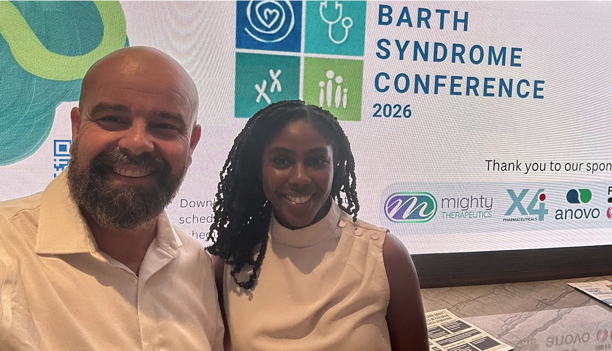
In July 2026, the QUALIREHAB team attended the Barth Syndrome Foundation's International Scientific, Medical, and Family Conference — the world's largest gathering of the global Barth syndrome community, held every two years at the Hyatt Regency Coconut Point Resort in Bonita Springs, Florida.
Barth syndrome is a rare and serious genetic condition caused by mutations in the TAZ gene, affecting primarily males. It impacts the heart, muscles and immune system, and is associated with significant physical deconditioning and reduced quality of life from early childhood. For the QUALIREHAB team, the conference represented a key opportunity to explore how the hybrid rehabilitation model — already validated in congenital heart disease and expanding to other chronic conditions — could be applied to this rare disease population.
Prof. Pascal Amedro represented the QUALIREHAB team, presenting a recently published case report on cardiac rehabilitation in a patient with Barth syndrome. His presentation highlighted the potential of personalized, hybrid rehabilitation to improve physical fitness, cardiac function and daily life for individuals living with this rare condition — and sparked important conversations about extending structured rehabilitation to rare disease populations that are currently underserved.
The conference brought together affected individuals and their families, researchers, clinicians and healthcare leaders — all united by the shared goal of improving outcomes for people living with Barth syndrome. For QUALIREHAB, it was a reminder that the principles behind the program — exercise, education, psychosocial support — are relevant far beyond cardiology, wherever children and young people face the burden of chronic disease.
The QUALIREHAB team looks forward to building on these conversations and exploring future collaborations with the Barth syndrome research and patient community.